Memphis, Tennessee. MIT. Carolina Piedmont. Silicon Valley. Blues in Mississippi. Taiko in Kyoto. Lee is on a quest, and it shows in his music.
The quest? To go beyond diversity and variety. Learning how we each are different is just a start; Lee is exploring how we are the same. And it shows in his music.
The goal? Bring out the best of every music. "The most important quality of a good arranger is insight", says Lee Allen. "You've got to size up the song as though it were a person - it actually is somebody's baby, you know." Bring out the key strengths of the song, apply insight, look at the song a new way - the result is an arrangement that speaks directly to the listener's heart.
Insight, in this case, has been gained from a varied playing history that started when Lee began playing Memphis nightclubs during the late 60's, at the age of 14 (don't tell!).
The band in which Lee played became one of the most popular club, touring and show bands in late-60’s and early 70’s Memphis. Their work included backing Ollie and the Nightengales, touring with soul- and beach-music legend Major Lance. and once opening for blues legend Bobby Womack
“Memphis will always have a special place in American music history because it was the musical home of Elvis, BB King, Otis Redding, Isaac Hayes, the Staple Singers, Al Green and dozens of other artists -- and all at the same time! It was very exciting to be a small part of this historic explosion and celebration of talent.”
Later, while a student at MIT, Lee helped another musician introduce a gospel choir to the MIT campus, and held the pianist position in the MIT Festival Jazz Ensemble, the school's A-list jazz band under the direction of Herb Pomeroy of the Berklee School of Music, from freshman year until graduating from MIT (and also served as student-government president!).
During the '80's, Lee Allen was an arranger and accompanist for various performers including the Gene Roberts Trio (left), and also began his current solo music business. During the '90's, Lee organized church music programs in Cambridge, Massachusetts and Silicon Valley, California in addition to performing as a soloist and "virtual jazz trio".
Lee Allen began his current offering as a "solo pianist with the sound of a jazz trio" during 2005 with recurring engagements at Silicon Valley restaurants and performances in upscale private homes and country clubs.
Lee does not use any high-minded labels for his work. "To tell the truth it's just easy-listening for the 21st century, influenced by jazz and some other things," Lee says. "But I believe that this kind of music is very important because it is the prime indicator of where the general population stands musically at any given time."
"Music is a language of feelings and emotions. So, when I arrange or compose, I imagine listeners saying 'I am opening a door to my feelings, don't abuse my trust'.
"I understand that everybody likes a wild ride now and then, but I leave that music for others to make. It's nice sometimes to be merely entertained by music, but I am seeking to create simple, beautiful things and then share them with the listener."
People have described Lee Allen's music as relaxing but not boring; clean but not mechanical; very-high-quality but not aloof or esoteric. Lee seeks the themes that unify us and inspire us, that build us up. And it shows in his music.
















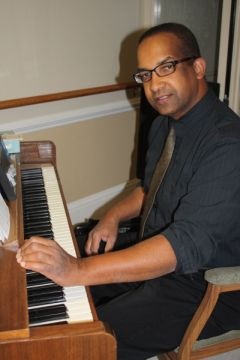 Memphis, Tennessee. MIT. Carolina Piedmont. Silicon Valley. Blues in Mississippi. Taiko in Kyoto. Lee is on a quest, and it shows in his music.
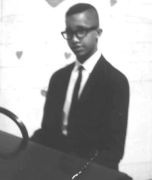 Insight, in this case, has been gained from a varied playing history that started when Lee began playing Memphis nightclubs during the late 60's, at the age of 14 (don't tell!).
 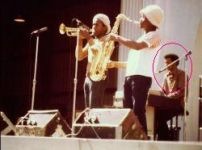 “Memphis will always have a special place in American music history because it was the musical home of Elvis, BB King, Otis Redding, Isaac Hayes, the Staple Singers, Al Green and dozens of other artists -- and all at the same time! It was very exciting to be a small part of this historic explosion and celebration of talent.”
  Later, while a student at MIT, Lee helped another musician introduce a gospel choir to the MIT campus, and held the pianist position in the
 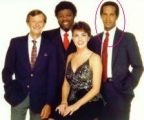 During the '80's, Lee Allen was an arranger and accompanist for various performers including the Gene Roberts Trio (left), and also began his current solo music business. During the '90's, Lee organized church music programs in Cambridge, Massachusetts and Silicon Valley, California in addition to performing as a soloist and "virtual jazz trio".
 Lee Allen began his current offering as a "solo pianist with the sound of a jazz trio" during 2005 with recurring engagements at Silicon Valley restaurants and performances in upscale private homes and country clubs.